| Shelf | Level | Time | Hook | Yarn |
|---|---|---|---|---|
| Odds and ends | Intermediate | 8-12 Hours | 2.5 mm | Fingering |
Light Shaded Juliette Shawl Crochet Pattern
Crochet the Light Shaded Juliette Shawl with a soft gradient effect using merino wool blend yarn—an elegant, cozy handmade wrap for any season of the year.
01 · The pieceWhat Light Shaded Juliette Shawl Crochet Pattern actually is
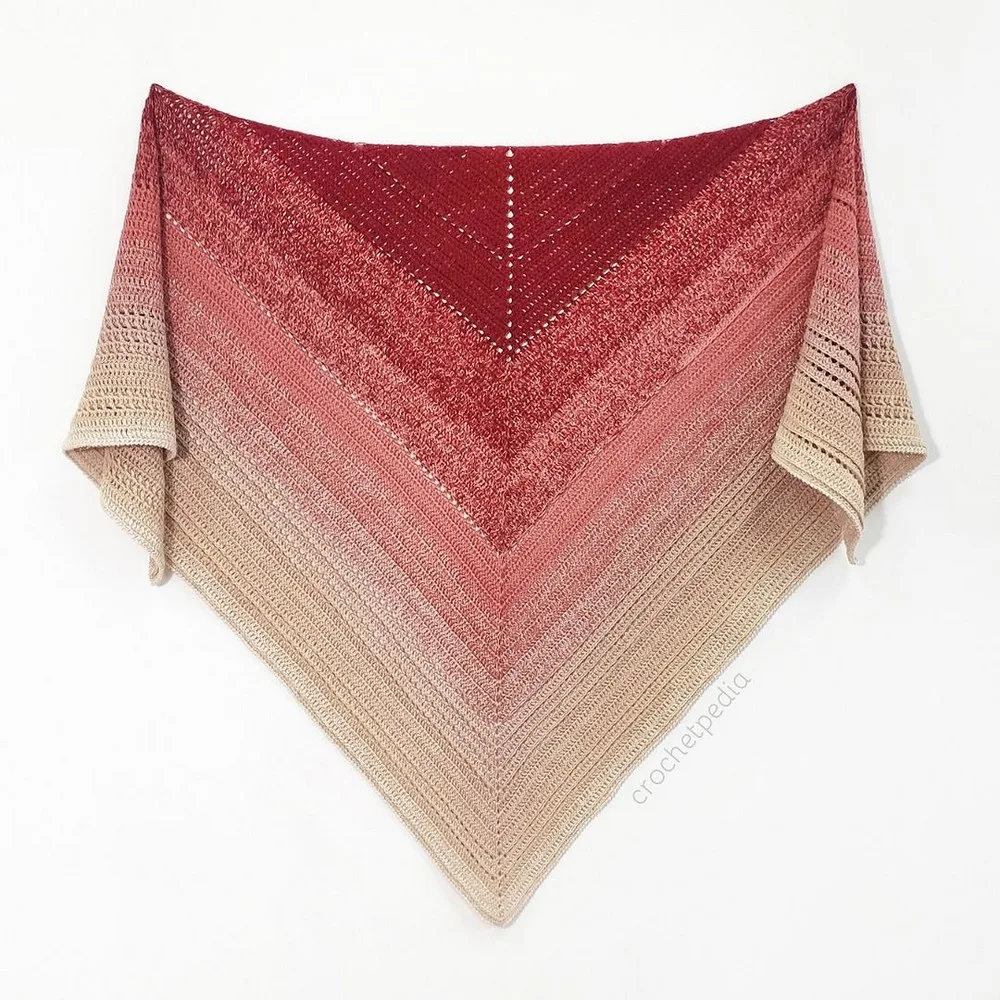
The Light Shaded Juliette Shawl is one of those patterns that feels almost too pretty to be this simple to make. Worked up in a single cake of gradient merino wool blend yarn, it builds its own soft color story round by round, shifting subtly from light to deeper tones without a single color change on your part. It's perfect for crocheters who love the look of hand-dyed, ombré pieces but want the ease of a self-striping yarn doing the color work for them.
This shawl leans on turned rows worked outward from a central point, so you'll want to be comfortable with basic increase placement and keeping your stitch count tidy as the piece grows. It's a lovely project for upper beginners — not fussy, but rewarding enough to keep your attention as you build confidence with rows and simple increases. Plan on roughly 8 to 12 hours total, easily broken into a few evenings or a couple of lazy weekend sessions with your favorite show playing in the background.
The finished Juliette Shawl drapes beautifully — light, airy, and soft against the skin thanks to that merino wool and acrylic blend, with just enough structure to hold its shape over the shoulders. It's the kind of piece that looks equally at home over a summer dress or layered with a sweater in cooler weather. Wrapped up with a ribbon, it makes a genuinely thoughtful handmade gift for a birthday, a new mom, or simply someone who deserves something soft and beautiful.
- Start at the center point and establish your first rows to set the shawl's foundation shape.
- Work steadily in turned rows, letting the gradient yarn shift color naturally as you go.
- Keep track of your row count as you go (a row counter helps) so you never lose your place.
- Continue adding rows evenly, checking that the piece lies flat rather than cupping or rippling.
- Keep an eye on your remaining yarn as the gradient cake winds down toward its final shades.
- Finish the last row cleanly and weave in your single starting and ending tail.
- Block the finished shawl gently to open up the stitches and let the merino blend relax into its drape.
- Give it a final shape check while damp, then let it dry fully before wearing or gifting.
02 · The count run4 rounds across 2 parts, each with its count
US terms throughout. Every row below ends with the count that round finishes on.
| Part | Qty | Finishes on |
|---|---|---|
| Making Process | 1 | - |
| Continue... | 1 | - |
Start: Begin with a magic ring.
| Round | Instruction | Count |
|---|---|---|
| Row 1 | Chain 3 (counts as 1 dc), then make 2 dc, 2 ch, and another set of 3 dc into the magic ring. | - |
| Row 2 | (All Double Crochets): Start with chain 3 (1 dc inc), then 1 dc in each stitch until the middle section (4 dc for this row), at the middle do 2 dc, 2 ch, 2 dc all into chain space, continue with 1 dc in each stitch till the last two stitches (again, 4 dc), and end the row with 1 dc inc, 1 dc.Rows 3-10: Repeat the instructions from Row 2. | - |
| Round | Instruction | Count |
|---|---|---|
| Row 11 | (Back Post + Holes): Do not add stitches on the edges. Every dc is a bp dc. Start with chain 4, skip one, then 1 bp dc, 1 ch, skip one , repeat till the middle, after the middle, follow the same pattern till the end of the row. The last stitch should be 1 bp dc. | - |
| Row 12 | (DC’s Over Holes): Follow the pattern from Row 2, ensuring 1 dc in each chain space to maintain correct stitch count.Repeat the pattern: Continue according to the pattern instructions, alternating between all double crochet rows, back post + holes rows, and dc’s over holes accordingly, until you reach Row 68. | - |
03 · Before it goes to a childWhat has to be right, and what is allowed to drift
- 💡 Because this pattern uses a fine 2.5mm hook and fingering-weight merino blend, work in good light — the stitches are small and it's easy to miscount without a clear view.
- 💡 Wind your gradient cake into a center-pull ball before starting if it feels tightly packed, which helps prevent tangling as you pull yarn from deep inside during long rows.
- 💡 Keep track of your row count from the start with a row counter or tally marks — retrofitting an accurate count later once the shawl is large is far more frustrating than tracking it from the beginning.
- 💡 Keep tension relaxed rather than tight; this shawl relies on drape, and overly tight stitches with a small hook can make the fabric feel stiff instead of soft and flowing.
- 💡 Try the shawl on (or drape it over a chair sized similarly to your shoulders) partway through so you can decide if you want to add a few extra rows before finishing.
- 💡 Save a length of yarn from the gradient cake before you start in case you need it later for a matching edge, tie, or repair — gradient yarns can be tricky to match again once cut.
04 · Snag listWhat went wrong on the bench, and the fix
Snag 1
Losing track of your row count as the shawl grows larger
Keep a running tally of your row number (a row counter or notepad works well) as you go — this becomes essential once the shawl gets large and it's easy to lose count.
Snag 2
Working increases inconsistently
Count your stitches at the end of every row against the expected total, and lay the piece flat every few rows to check it's growing evenly before continuing.
Snag 3
Splitting the yarn plies with the hook
Slow down when inserting your hook, especially into wraps or previous stitches, and consider a hook with a slightly pointed tip to glide through the merino blend cleanly.
Snag 4
Not accounting for the yarn's gradient
Before starting, loosely wind off and check where the color transitions fall on the cake so you have a rough sense of how many rows each shade will cover.
Snag 5
Blocking too aggressively
Since this yarn is a merino-acrylic blend, block gently with a light steam or cool soak — avoid pulling too hard on the points, as acrylic won't relax back the way pure wool does.
Snag 6
Running out of yarn before reaching the desired size
Weigh your remaining cake periodically as you crochet and stop increasing with enough left for a finishing round, rather than crocheting until you run out mid-row.
05 · VariantsOther ways to issue this one
One of the easiest ways to make this shawl your own is to play with yarn choice. If you love the gradient effect but want a different palette, look for other self-striping fingering or lace-weight cakes — Scheepjes Whirl, Caron Cakes in a lighter weight substitute, or a hand-dyed gradient mini-skein set from an indie dyer all work beautifully in place of the Kokonki Merino. For a warmer, more rustic feel, swap in a wool-alpaca blend; for a cooler-weather version with extra drape, try a silk-merino blend that will show off the stitch definition even more. Size is easy to customize too — since the shawl grows in rows from the center, simply work additional rows beyond the pattern's stated total to add more depth and width, checking your gauge and remaining yarn as you go. If you're low on yardage or want a smaller, scarf-like version, stop several rows early and finish with a simple edge round instead. For themed variations, this pattern is a wonderful canvas for seasonal palettes even without swapping techniques — a cake gradating from cream to soft rose feels romantic for spring gifting, while deep plum-to-charcoal gradients feel rich and cozy for fall. If you want to add a personal touch, work a single round of contrasting color at the very end as a border, or add fringe along the outer edge using leftover strands from your gradient cake for a boho-inspired finish.
06 · QueriesQuestions logged against this build
What yarn weight is best for the Juliette Shawl if I can't find the exact Kokonki Merino yarn?
Any fingering or light DK-weight yarn with good yardage (around 1,300 meters per cake) will work well. Look for a gradient or self-striping cake in a merino or merino-acrylic blend for the softest drape.
Do I need to change colors manually while making this shawl?
No — the gradient effect comes entirely from the self-striping cake of yarn, so you simply crochet with one continuous strand and the color shifts happen naturally as you work through the rows.
Is this pattern good for a beginner crocheter?
Yes — this pattern is designed for upper beginners who are comfortable with basic stitches like chain and double crochet. It's worked in turned rows with straightforward increases, so if you've made a simple scarf or dishcloth before, you'll likely be comfortable here.
How long does the Light Shaded Juliette Shawl take to finish?
Most crocheters complete it in about 8 to 12 hours of stitching time, which usually spreads across several evenings or a couple of weekend sessions given the fine yarn and small hook.
Can I make this shawl bigger or smaller than the original size?
Yes — since it grows outward in rows from a central point, you can simply work more rows for a larger, more dramatic shawl or stop earlier for a smaller, scarf-like wrap, keeping an eye on your remaining yarn.
Original pattern: https://crocheteverything.com/crochet-juliette-shawl-pattern/
07 · Made byWho counted this one

Who writes Amigurumi Addict, how a build gets its number, and why every round on the site carries a stitch count.
08 · Next off the benchThree builds that sit near this one
Odds and ends
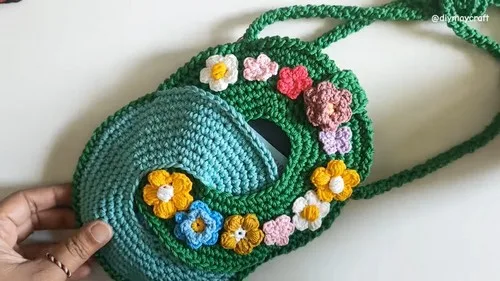
Crochet a phone bag with strap, flap, and ring closure
How to crochet a phone bag? Join rounds from a 30-chain base, add a strap, flap, and ring.
Odds and ends
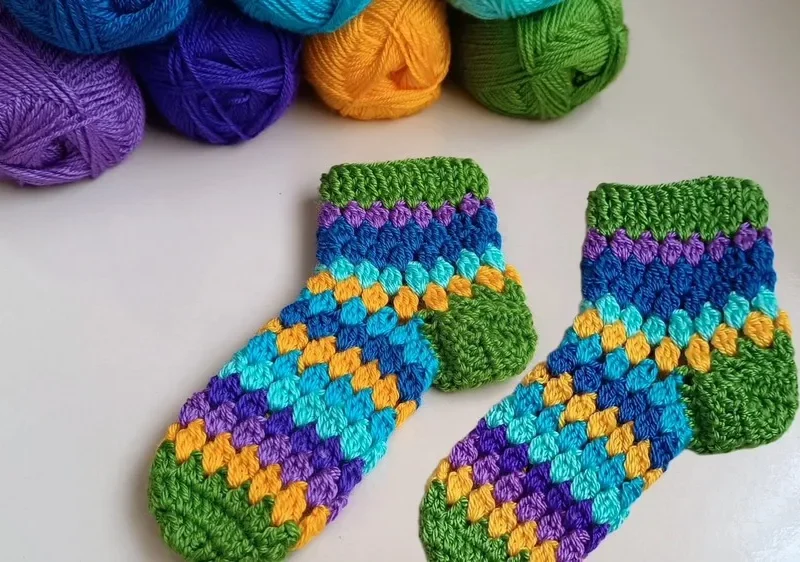
Crochet worsted weight socks with a turned heel
How do you crochet socks for winter? Build toe-up in worsted weight with a folded heel and ribbed leg.
Odds and ends
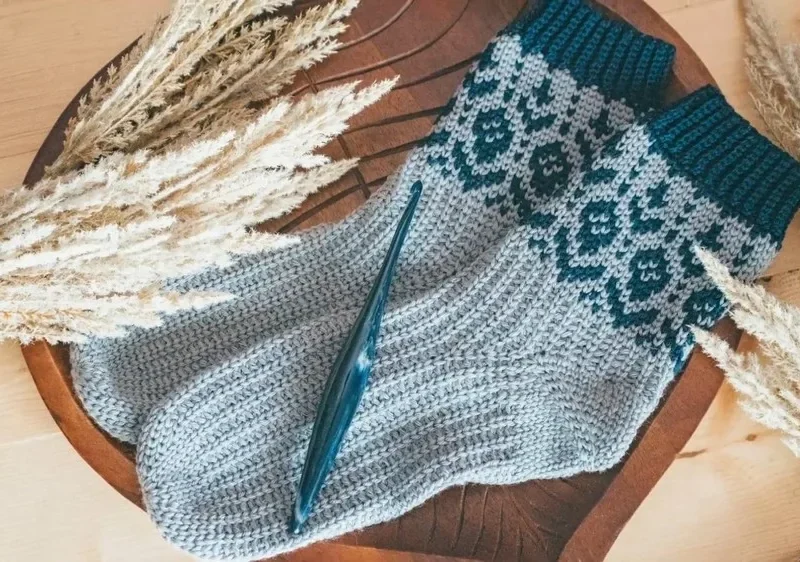
Toe-Up Woodland Walker Crochet Socks With Colorwork Cuff
How do you crochet toe-up socks with a colorwork cuff? Build the Toe, Heel, and stranded Cuff in order.
Join the build log
One message when a build is issued
A drawing and its parts list, when one leaves the bench.